
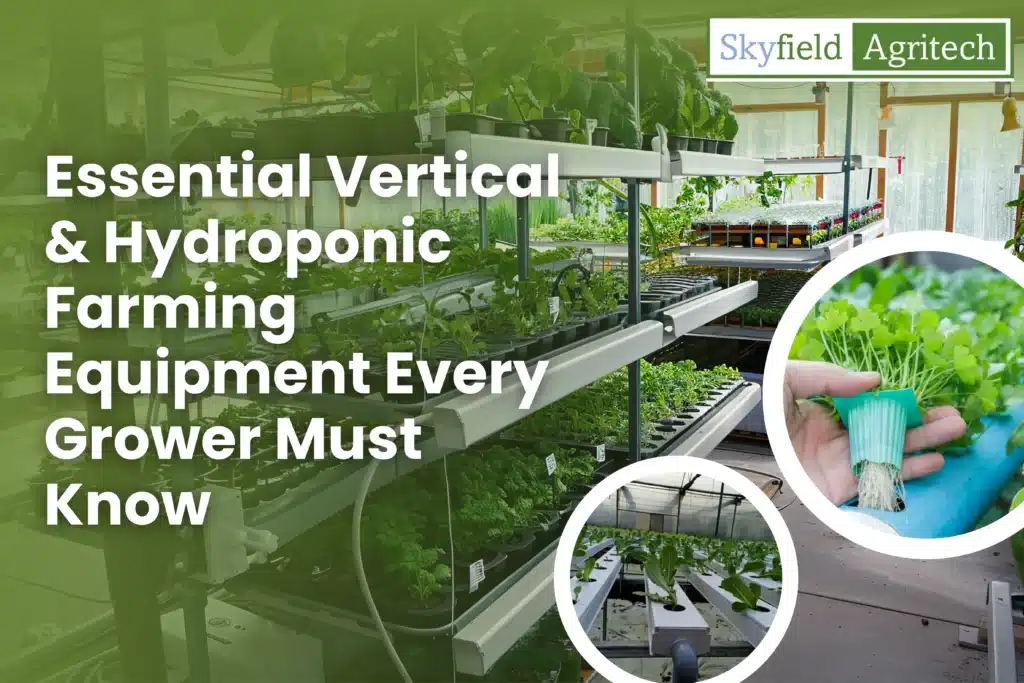
To start your own modern farming operation, whether it’s an entire indoor vertical farm or a hydroponic farming system on your balcony, the most important thing to consider is what kind of vertical farming equipment you need.
Growers today are using more than just concern for the amount of light they have, the presence of soil, or luck; they are relying on technology and data to be able to streamline their operations and know their grow process with the least amount of risk involved; therefore, farming has become a more systematic (and therefore effective) way of producing food.
Farms of any type today rely on hydroponic farming equipment or vertical farming equipment to deliver maximum results with minimum effort. The downside to this is that new farmers can often become overwhelmed with which items (if any) are required and which ones are just flashy add-on products.
This blog will help you with the decision-making process in choosing the items needed to operate your own hydroponic or vertical farming system.
Why the Right Equipment Matters
- You use less water
- You grow more crops in less space
- You control light, nutrients, and climate
- You reduce dependency on the weather
This is why it is crucial to select the best vertical farming components for your needs. Conversely, when a vertical farm is set up correctly, the equipment increases production and allows for a longer period of time that plants can be healthy and continue to sustain life on the planet.
1. Grow Lights
Light is the factor that can’t be ignored as it is the essential element for the photosynthesis process.
Good grow lights ensure:
- Proper leaf development
- Better nutrient absorption
- Faster growth cycles
Best for: Indoor vertical farming, hydroponic vertical farming
Tip: Choose full-spectrum LEDs; they mimic natural sunlight and save electricity.
2. Hydroponic Reservoir & Water Pump System
Every hydroponic system needs a strong water management setup. This includes:
- Water reservoir
- Water pump
- Air pump (for oxygen)
- Tubes and connectors
This equipment ensures nutrients reach the plant roots consistently. Since vertical farming water usage is lower than soil farming, the pump system plays a major role in maintaining circulation.
Why it matters: Less stagnation → fewer diseases → steady plant growth.
3. Nutrient Delivery System
Hydroponic farming works on nutrient-rich water instead of soil. For this, you need:
- A reliable nutrient mix
- pH adjusters
- EC (electrical conductivity) meter
- Automatic dosing system (optional but helpful)
A good nutrient delivery system ensures plants get the right balance of minerals at every stage.
Primary role: Keeps roots healthy and prevents nutrient burn or deficiency.
4. Vertical Racks & Growing Trays
These are the core vertical farming tools as they define the structure of your entire farm.
Vertical racks allow you to stack layers of plants one above the other, making excellent use of space.
Growing trays include:
- NFT channels
- Deep Water Culture tubs
- Grow beds for microgreens
Why it’s essential: Sturdy racks ensure safety, stability, and good airflow between layers.
5. Climate Control System (HVAC)
Since indoor farms depend on controlled environments, you must maintain:
- Ideal temperature
- Humidity
- CO₂ levels
- Fresh airflow
This makes HVAC one of the most underrated yet important vertical farming components.
Benefits:
- Reduces pest problems
- Ensures uniform plant growth
- Prevents mold buildup
6. Hydroponic Grow Media
Plants in hydroponic systems need supportive media instead of soil. The most commonly used grow media under the hydroponic equipment list include:
- Coco peat
- Perlite
- Rockwool
- Clay pebbles
Each media type has its own benefits, but all help support roots while allowing oxygen flow.
7. Timers, Controllers & Automation Tools
If you don’t want to manually switch lights, pumps, and nutrient cycles, automation saves time.
Automation tools include:
- Light timers
- Irrigation controllers
- Humidity sensors
- Smart farming dashboards
These tools improve efficiency and reduce human errors, especially in commercial farms.
8. Water Filtration & Sterilization System
To prevent contamination, you need:
- RO filters (optional)
- UV sterilizers
- Mesh filters
Clean water means healthier plants. This becomes even more important in hydroponic vertical farming, where water circulates continuously.
9. Seedling Germination Equipment
A successful farm begins with healthy seedlings. Essential items include:
- Seedling trays
- Natural grow cubes
- Heat mats (for temperature-sensitive crops)
- Dome covers for humidity
Good seed germination increases overall crop success.
10. Monitoring Devices
If you’re serious about hydroponics, these small tools are non-negotiable.
They help you measure:
- pH – whether the nutrient water is acidic or alkaline
- EC/TDS – nutrient levels
Accurate monitoring helps prevent plant shock and maintain optimum conditions.
Hydroponic vs Vertical Farming Equipment
| Equipment Type | Hydroponic Farming Equipment | Vertical Farming Equipment |
| Growing Support | Grow media, NFT channels | Vertical racks, stacked trays |
| Water Management | Reservoir, pump, filters | Water distribution per layer |
| Light | Optional (outdoor) / LED (indoor) | LED grow lights (mandatory) |
| Climate Control | Moderate | High (requires HVAC, sensors) |
| Automation | Useful but optional | Highly recommended |
| Space Usage | Horizontal or vertical | Strictly vertical, multi-layer |
Conclusion
Hydroponic and vertical farming equipment will determine how effective your hydroponic setup will be. These are designed to allow you to use less water, increase the amount of produce you grow, and have a consistent level of health for your plants.
Modern agriculture has evolved to produce more efficiently. As part of this category, hydroponic and vertical farm equipment give you everything you need to build a productive, resilient, and sustainable future farm.
Also Read : 10 Surprising Facts About Vertical Farming You Probably Didn’t Know
FAQs
1. What is the most important piece of Hydroponic Farming Equipment?
The top 4 equipment types that support successful hydroponic farming are Nutrient Delivery Systems, Water Pumps, Grow Lights, and Grow Media, which are required for optimal plant development.
2. Does vertical farming equipment demand higher electric consumption?
Energy consumption is higher than that of traditional farming due to the use of Grow Lights and climate control equipment, but with many types of efficient LED Lights and Automation Tools, your total energy costs are lessened.
3. As a newbie, can I try Vertical Farming at home?
Definitely! To begin Vertical Farming at home, you only need some small shelving or storage racks, a few LED lights (depending on your growing area), basic pumps, and nutrient solutions to create a basic indoor Vertical Farming Unit, even within limited space constraints.

