
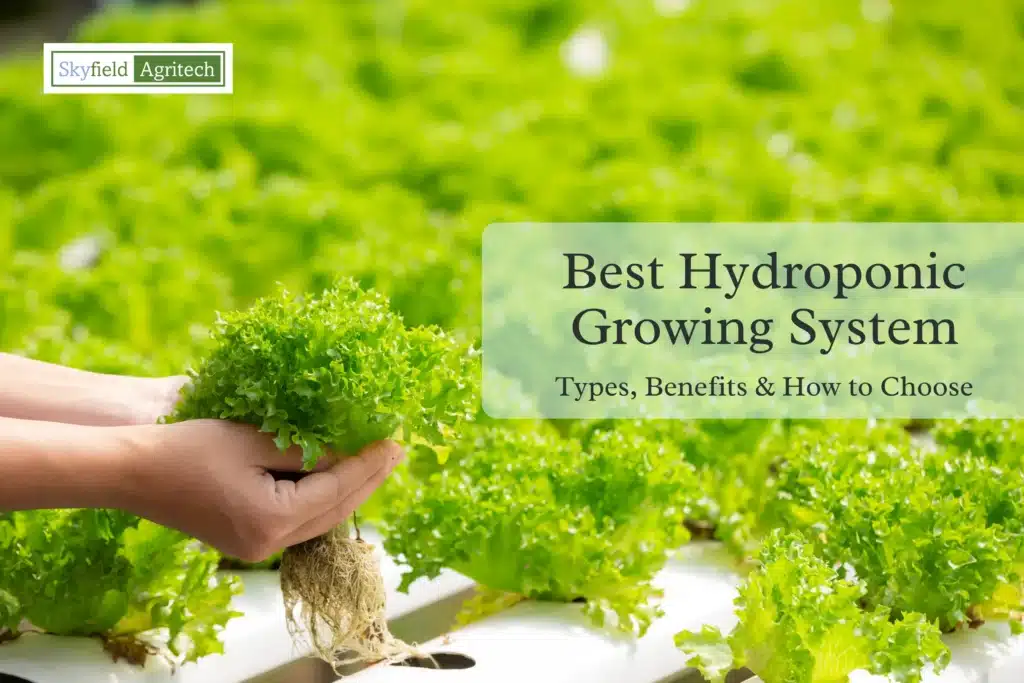
Till now, the majority of farmers have been using traditional methods of cultivation, but with the passage of time, agriculture has undergone so many changes that a great number of farmers are opting for the modern, sustainable style of cultivation. One such change/one of the most effective changes, is hydroponics—an ingenious and advanced method of growing plants without soil. Whether you are a home gardener, commercial grower or urban farmer, the best hydroponic growing system will serve you well in terms of production, efficiency, and resources.
What Is a Hydroponic Growing System?
Hydroponics refers to soil-free cultivation. Plants are planted in water that contains nutrients instead of soil. They get minerals and oxygen by means of their roots. This enables quicker and stronger growth of plants. The system consumes less water than traditional farming. It also enables the health and growth of plants to be controlled better.
Contemporary indoor hydroponic systems are engineered to facilitate high-yield production with less use of water, less dependence on land, and less environmental impact.
Hydroponics vs Traditional Farming
One reason why hydroponics is becoming more common in the world is that people are comparing hydroponics vs traditional farming.
Main Differences:
- Water Usage: Hydroponics consumes up to 90% less water
- Growth Speed: Plants grow 30-50% quicker
- Space Efficiency: Best for urban and indoor utilization
- Soil Dependency: Not at all—great for regions with poor soil
- Pest Control: Fewer soil-borne diseases
Traditional farming depends on climate and land quality. Soil-less farming systems offer stability and can grow at any time of the year.
Benefits of Using the Best Hydroponic Growing System
There are several benefits to choosing the best hydroponic growing system:
- Plants grow faster, and yields are increased
- You can control the nutrients more accurately
- There is a reduction in the use of pesticides
- A space-saving vertical option
- Suitable for indoor and urban farming
- Environmentally friendly and sustainable
Such benefits are attracting hydroponics as a method of choice for both beginners and commercial growers.
Types of Hydroponic Systems Explained
To select the most appropriate type of hydroponic systems, it is imperative to understand the various types of these systems. All systems are optimal in certain crops, areas, and abilities. Others are basic and can be used by a beginner, whereas some require technical expertise. Space, budget, and choice of crop are all relevant. The appropriate selection of systems assists in the development of better plants and the minimization of errors.
1. Nutrient Film Technique (NFT)
The Nutrient Film Technique (NFT) is one of the most popular hydroponic systems for growing leafy greens at home or commercially.
How it works:
The plant’s roots are laid out in the inclined troughs, and a very light layer of nutrient solution keeps flowing over them all the time.
| Best For |
|
| Pros |
|
| Cons |
|
2. Aeroponics Farming
Aeroponics farming is a high-tech soil-less concept where the roots hang in the air and are sprayed with nutrient solution.
| Best For |
|
| Pros |
|
| Cons |
|
This system can be considered among the top hydroponic growing system for maximum output.
3. Drip Systems
Drip Systems are adaptable and a favorite choice of both small and large-scale indoor hydroponic systems.
How it operates: Nutrient solution is slowly dripped at the base of each plant.
| Best For |
|
| Pros |
|
| Cons |
|
4. Wick Systems
Wick Systems are the most basic form of soil-less farming systems and the perfect choice for beginners.
How it works:
A wick transports nutrients from a reservoir to the plant roots.
| Best For |
|
| Pros |
|
| Cons |
|
5. Vertical Hydroponic Systems
Vertical Hydroponic Systems are strategically made to exploit the spaces to the fullest; therefore, they are great for cities and indoor environments.
| Best For |
|
| Pros |
|
| Cons |
|
Vertical setups are often considered the best hydroponic growing system for modern urban farmers.
Indoor Hydroponic Systems: Growing Year-Round
Indoor hydroponic systems are a great way to allow growers to have total control over factors like light, temperature, and nutrients. With the help of LED grow lights and climate control, one can grow plants all year round, regardless of the weather outside.
Hence, hydroponics is perfect for:
- Apartments
- Warehouses
- Greenhouses
- Urban farming projects
How to Choose the Best Hydroponic Growing System
Choosing the best hydroponic growing system to a great extent is hinged on different factors such as:
1. Available Space
Compact homes may use vertical hydroponic systems for their benefit, while more spacious ones can consider drip or NFT systems.
2. Crop Type
Different crops suit different hydroponic systems. For example, leafy vegetables are very suitable in NFT systems, while fruiting plants such as tomatoes and strawberries give better yields in drip systems.
3. Budget
Wick systems are the most affordable, while aeroponics requires significantly more investment.
4. Experience Level
Beginners should start with simple systems before advancing to complex setups.
Sustainability and the Future of Soil-Less Farming Systems
As the demand for food keeps increasing and the land fitted for cultivation keeps getting smaller, soil-less farming systems are going to be a crucial part of future agriculture. Hydroponics helps continue sustainable food production through water saving, doing away with soil degradation, and promoting growing food locally.
With technology getting better, hydroponics is likely to become a great contributor in providing food to urban people in an efficient way.
Final Thoughts: Which Is the Best Hydroponic Growing System?
In deciding on the type of hydroponic system to adopt, there are a few things that you need to keep in mind. The space that you will be able to afford, the kind of plants that you will cultivate, the amount of money you have already settled on, and what you already know about hydroponics are some of the things that require answers. One has a very simple wick system on one side and a very complicated aeroponics system on the other sid,e which are two totally different modes of operation but nonetheless capable of delivering the features which you may be seeking.
By getting familiar with different types of hydroponic systems and by reflecting on the distinctions between hydroponics vs traditional farming, growers will be able to choose the most appropriate method for themselves, and they will be able to exploit a farming method that is both sustainable and efficient.
Hydroponics is far from being a craze—this is how agriculture will be in the future.

