
Seeing yellow leaves on plants can be frustrating. One day your plant looks healthy, and the next day the green color starts fading. Many growers face this issue and wonder what went wrong.
Plants do not turn yellow without reason. When something is off, water, light, roots, nutrients, the leaves show it first. It happens in pots, in fields, and also in hydroponic systems where even small imbalance can cause yellow leaves in hydroponics. The problem is not always obvious at first glance.
If you are wondering about plant leaves turning yellow, or trying to understand how to fix yellow leaves on plants, the answer usually lies in small details. Not complicated science. Just careful observation and the right correction at the right time.
Why Yellow Leaves on Plants Appear
Leaves usually turn yellow when the plant is not comfortable. Something is bothering it. Could be water, could be food, could be the roots sitting too wet for too long. When that stress builds up, the green colour slowly fades. Chlorophyll drops, and yellow starts showing. That is how plant leaves turning yellow begins in most cases.
Many people ask, “why are my seedlings turning yellow?” Seedlings are sensitive. Roots are still small, so even slight overwatering or weak nutrition affects them fast. In hydroponic systems too, hydroponic leaf yellowing causes often come from pH drifting or nutrient strength being a little too high or too low. Yellowing never happens randomly. If you look closely, the pattern usually tells you what went wrong.
Common Nutrient Deficiencies That Cause Yellow Leaves
One common reason for yellow leaves on plants is nutrient deficiency. When a plant does not get the right minerals, chlorophyll reduces and the green colour starts fading. This type of deficiency plant leaves turning yellow problem appears in soil and also in yellow leaves in hydroponics. The yellowing pattern usually tells you which nutrient is missing and how to fix it properly.
1. Nitrogen Deficiency
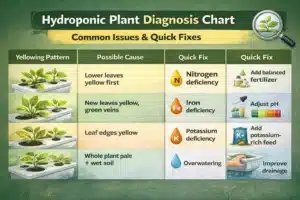
Nitrogen is what keeps leaves properly green. When it runs low, the plant does something interesting. It pulls nitrogen from the older leaves to save the new growth. So the bottom leaves begin fading first. They turn light green, then yellow. Meanwhile the top still looks fine, which confuses many people.
If the yellowing starts evenly from the lower part of the plant, nitrogen is often the reason. Growth may slow down too. In cases of hydroponic plant yellow leaves, this can happen if the nutrient solution is too weak or feeding is irregular. The pattern usually moves upward slowly, not all at once
2. Iron Deficiency
Iron behaves differently. Here, the youngest leaves show the problem first. They turn yellow, but the veins stay green. It almost looks like someone drew green lines across a pale leaf.
This often connects to pH. In yellow leaves in hydroponics, iron becomes difficult to absorb when pH is too high. So even if iron is present in the solution, the plant cannot use it properly. When new leaves are yellow but veins stay clearly green, iron chlorosis is usually behind it
3. Magnesium Deficiency
Magnesium issues also show yellowing between the veins, but the starting point is different. It usually begins on older leaves. The centre of the leaf fades first while veins remain darker.
This type of deficiency plant leaves turning yellow spreads slowly if ignored. Leaves may not drop immediately, but they start looking tired and dull. In hydroponic systems, imbalance between calcium and magnesium can sometimes block proper absorption. The yellowing does not appear overnight. It builds gradually.
4. Potassium Deficiency
Potassium problems often show up along the edges of the leaf. The margins turn yellow first. Later, those edges may become brown or slightly dry.
This usually means the plant is struggling to manage water and overall strength. In both soil crops and cases related to hydroponic leaf yellowing causes, edge yellowing is a strong sign of potassium shortage. The centre of the leaf may still look green for some time, which makes it easy to miss in the beginning.
Environmental Causes of Yellow Leaves on Plants
Not all yellow leaves on plants come from nutrient problems. Many times the plant is reacting to its surroundings. Water, light, heat, airflow, these matter more than people think. Even when fertiliser is correct, plant leaves turning yellow can still happen if the environment is off balance.
In hydroponics also, hydroponic leaf yellowing causes are often linked to water conditions and temperature, not just nutrients.
1. Overwatering
This is one of the most common reasons. Too much water sounds harmless, but roots need oxygen. When soil stays wet for too long, roots cannot breathe properly. Slowly they weaken. Then leaves start turning yellow.
You may notice:
- Soil always wet and heavy
- Lower leaves yellow first
- Growth looking slow or soft
In severe cases, root rot begins. Even in hydroponic systems, if water flow is poor or oxygen levels drop, hydroponic plant yellow leaves can appear for the same reason.
2. Underwatering
Too little water also stresses the plant. When roots cannot pull enough moisture, the plant reduces activity. Leaves may turn pale yellow and feel dry.
Common signs:
- Dry, cracked soil
- Leaves looking thin or weak
- Yellowing along with slight curling
Here the yellowing usually comes with dryness. It feels different from overwatering.
3. Poor Drainage
Sometimes watering is fine, but drainage is not. If excess water cannot escape, the root zone stays waterlogged. This again limits oxygen.
Signs include:
- Water sitting on soil surface
- Slow drying after watering
- Yellow leaves combined with soft stems
This problem often looks similar to overwatering, but the real issue is trapped moisture below.
4. Too Much Sunlight / Heat Stress
Plants also get stressed by excess heat. When exposed to strong sunlight for long hours, leaves may first lose colour, then turn yellow or even slightly brown at the edges.
You may notice:
- Yellowing on top leaves
- Dry leaf edges
- Leaves facing direct sun looking weaker
Heat stress is common in summer and in greenhouses without proper ventilation.
5. Low Light
Light is food for plants. Without enough light, chlorophyll production reduces. Leaves may slowly fade to yellow, especially on the lower part of the plant.
This is common in indoor setups where plants are placed far from windows. In such cases, plant leaves turning yellow is not from deficiency but from lack of energy.
Environmental stress does not always show immediately. It builds up slowly. Observing watering habits and light conditions carefully helps prevent many yellow leaf issues before they spread.
Pests & Diseases That Lead to Yellow Leaves
Sometimes you do everything right. Water is fine. Nutrients look correct. Still the leaves turn yellow. In such cases, look closer. Very close. Many times tiny pests are sitting under the leaf, slowly feeding.
Aphids suck plant sap and weaken new growth. Spider mites leave tiny pale dots at first, then the leaf slowly loses colour. If roots are infected or starting to rot, the plant cannot absorb nutrients properly, and yellow leaves on plants begin showing up even though feeding is normal.
In hydroponic systems, root diseases spread faster because water moves everywhere. That is one of the common hydroponic leaf yellowing causes growers ignore. If roots look brown, slimy, or smell bad, the problem is below the surface.
Brown or slimy roots are often early signs of infection. Understanding how to prevent root rot in hydroponics can save your entire system from collapse.
Yellowing with spots, webs, or sticky residue usually points towards pests, not deficiency.
How to Diagnose the Cause Quickly
When plant leaves turning yellow starts, most people add fertiliser immediately. That is not always the answer. First observe. Plants give clues, but we have to notice them calmly.
Start with simple checks:
- See which leaves are yellow first, old ones or new ones
- Touch the soil or growing medium, too wet or too dry
- Look under the leaves for insects
- If possible, check roots, healthy roots are light coloured
- Think about recent changes in watering, light, or nutrients
For hydroponic growers, check pH and nutrient strength before adding anything new. Many cases of hydroponic plant yellow leaves happen because nutrients are present but not properly balanced.
Diagnosis is not complicated. Just slow observation. Once you know the cause, fixing becomes much clearer.
How to Fix Yellow Leaves on Plants (Easy Solutions)
When you see yellowing, the first thought is usually, “What should I add?” But fixing the problem is not always about adding something. It is about correcting what went wrong. That is the real answer to how to fix yellow leaves on plants.
Start simple. Check the basics first.
If watering is the issue:
-
- Let the soil dry a bit if it feels heavy and soggy
- Improve drainage if water collects at the bottom
- Water slowly and evenly instead of flooding the pot
If nutrients are the problem:
- Add balanced fertiliser if older leaves are yellow from the bottom
- Adjust pH if new leaves are yellow with green veins
- Supplement magnesium if yellowing appears between veins
- In hydroponics, correct EC and pH before adding more nutrients to fix hydroponic nutrient deficiency
If pests or disease are involved:
- Remove badly damaged leaves
- Clean the plant gently
- Improve airflow around the plant
For yellow leaves in hydroponics, always test the nutrient solution first. Many times the nutrients are present, but the roots cannot absorb them because the balance is off.
One more thing. Fully yellow leaves usually do not turn green again. Focus on new growth. If new leaves come out healthy, you are on the right track.
When Yellow Leaves Are Normal
Not every yellow leaf means danger. Plants also age. Lower leaves, especially the oldest ones, naturally turn yellow and drop off. That is normal growth cycle.
Sometimes after transplanting, or when seedlings move to a new environment, slight yellowing happens. Many growers worry and search “why are my seedlings turning yellow,” but often it is just adjustment stress. If new leaves are coming out green and strong, the plant is probably fine.
Look at the whole plant. If growth continues and only a few older leaves are yellow, there is no need to panic. Observe calmly before making changes.
Conclusion
Seeing yellow leaves on plants can feel worrying, but most of the time the plant is just reacting to stress. It could be watering, light, nutrient imbalance, or even pests. Once you slow down and observe properly, the cause usually becomes clearer. Fix the root issue, and new growth improves on its own.
Learning how to fix yellow leaves on plants is not about using more products. It is about understanding why plant leaves turning yellow in the first place. Whether in soil or dealing with yellow leaves in hydroponics, small steady corrections work better than quick random fixes.
FAQ’s
- Why are my seedlings turning yellow even after watering properly?
Seedling leaves turning yellow often happens due to overwatering, weak roots, or early nutrient imbalance. Check drainage and avoid excess fertiliser. - Can yellow leaves turn green again?
Usually no. Once a leaf turns fully yellow, it does not regain colour. Focus on healthy new growth instead. - How to fix yellow leaves in hydroponics quickly?
First check pH and nutrient strength. Most hydroponic plant yellow leaves cases come from imbalance, not lack of nutrients. Adjust slowly and monitor.

