
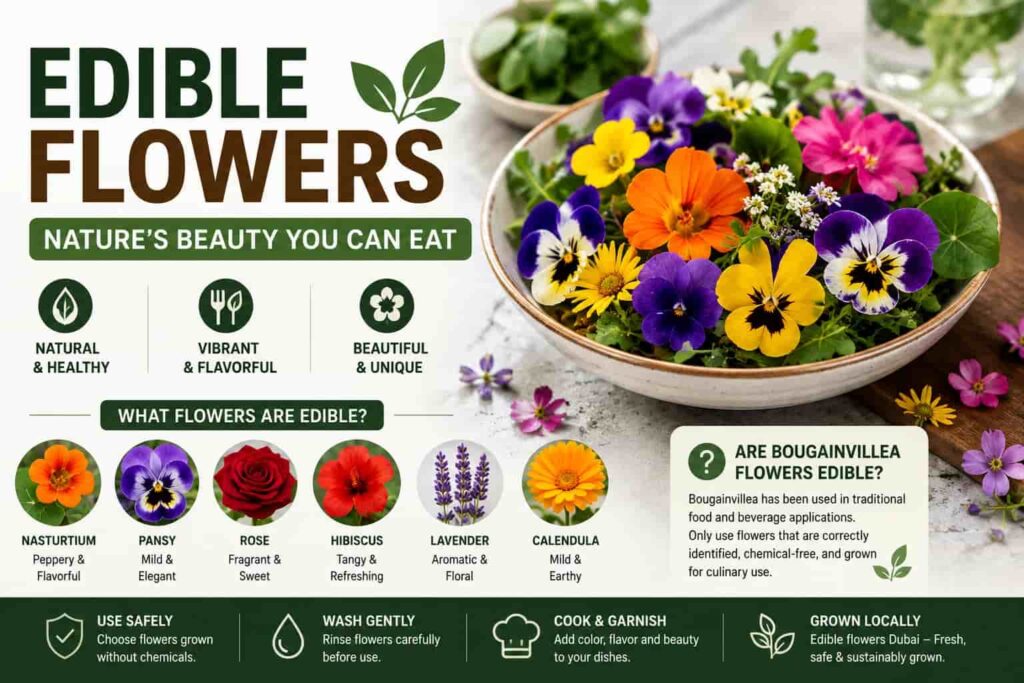
Flowers are usually associated with gardens, bouquets and decoration—but many flowers can also be used in the kitchen.
Edible flowers have been used in different cuisines for centuries. Today, they are increasingly used in salads, desserts, drinks, cakes and fine-dining dishes because they can add colour, texture, aroma and flavour to food.
However, there is one important rule to remember:
Not every flower is edible.
Some flowers are naturally unsafe to eat, while others may have been treated with pesticides or chemicals that make them unsuitable for consumption. This means you should never assume that a flower is safe simply because it looks attractive or is commonly used as decoration.
If you are interested in learning more about edible flowers, this guide explains what they are, what flowers are edible, how they can be used in food and what to consider before eating them.
We will also answer a common question:
Are bougainvillea flowers edible?
What Are Edible Flowers?
Edible flowers are flowers or specific flower parts that are considered suitable for human consumption and are used as ingredients or food garnishes.
They can be used to add:
- Colour
- Flavour
- Aroma
- Texture
- Visual appeal
Depending on the variety, edible flowers may taste:
- Sweet
- Peppery
- Mild
- Tangy
- Floral
- Herb-like
- Slightly bitter
Some flowers are used primarily for their appearance, while others have a noticeable flavour that can influence the overall taste of a dish.
In modern cooking, edible flowers are used in everything from salads and desserts to syrups, teas and restaurant dishes. They are also becoming increasingly popular in the UAE’s culinary and hospitality industry.
What Flowers Are Edible?
Many different flowers are used in food, but the exact edible part and culinary use can vary depending on the plant.
Here are some of the most commonly used edible flowers.
1. Nasturtium
Nasturtium is one of the most popular edible flowers.
Its flowers have a slightly peppery flavour, making them suitable for:
- Salads
- Sandwiches
- Savoury dishes
- Garnishes
The bright flowers can add strong visual appeal to a dish while also contributing flavour.
2. Pansies and Violas
Pansies and violas are commonly used for decoration and food presentation.
They can be used on:
- Cakes
- Desserts
- Cookies
- Salads
- Cheese platters
Their colourful petals make them particularly popular with chefs and bakers.
3. Roses
Rose petals have been used in food and drinks in many cultures.
Depending on the variety, they can be used in:
- Desserts
- Syrups
- Tea
- Rose water
- Jams
- Garnishes
However, only roses grown specifically for culinary use should be eaten.
Flowers purchased from a florist should not automatically be considered food-safe.
4. Hibiscus
Hibiscus is known for its vibrant colour and tangy flavour.
It is commonly used in:
- Tea
- Cold drinks
- Syrups
- Desserts
- Sauces
Dried hibiscus is also widely used in beverages around the world.
5. Calendula
Calendula flowers have colourful petals and are sometimes used to add colour to food.
Their flavour can be mildly peppery or tangy.
Calendula petals may be used in:
- Salads
- Rice dishes
- Soups
- Oils
- Garnishes
6. Chamomile
Chamomile flowers are commonly associated with herbal tea.
They have a delicate floral aroma and can also be used in:
- Tea
- Desserts
- Syrups
- Infusions
7. Lavender
Lavender has a distinctive floral aroma and should generally be used carefully because its flavour can become overpowering.
It is commonly used in:
- Desserts
- Cookies
- Syrups
- Tea
- Infused sugar
A small amount can add a noticeable floral character to food.
8. Cornflowers
Cornflowers are often used as colourful garnishes.
Their striking blue petals can make them particularly attractive for:
- Cakes
- Salads
- Desserts
- Fine-dining presentation
9. Squash Blossoms
Squash blossoms are widely used in several cuisines.
They can be:
- Stuffed
- Fried
- Added to salads
- Used as a decorative ingredient
Unlike some flowers that are mainly used for decoration, squash blossoms can also play a more substantial role in a dish.
Are Bougainvillea Flowers Edible?
Are bougainvillea flowers edible?
This question requires some caution.
Bougainvillea has been explored in traditional food and beverage applications, and research has examined compounds and pigments from certain Bougainvillea species. However, this does not mean that every bougainvillea growing in a garden or landscaping project should automatically be eaten.
There are several reasons for this.
Correct Plant Identification Is Important
Bougainvillea includes different species and varieties. Before consuming any plant material, it is important to correctly identify the plant.
Garden Plants May Have Been Treated With Chemicals
Bougainvillea used in landscaping may have been exposed to:
- Pesticides
- Insecticides
- Fertilisers
- Other garden chemicals
These plants are not necessarily grown for food consumption.
The Colourful Part Is Not Always the True Flower
The colourful structures that people commonly describe as bougainvillea “flowers” are technically modified leaves called bracts, while the plant’s true flowers are smaller and usually found within them.
The Safest Approach
If you want to use bougainvillea in food, only use plant material that has been:
- Correctly identified
- Grown specifically for culinary use
- Produced without unsuitable chemical treatments
- Sourced from a reliable food-grade supplier
Do not simply pick bougainvillea from a roadside, garden or landscaping area and eat it.
So, while bougainvillea has been used and studied in food-related contexts, the answer to “are bougainvillea flowers edible?” should not be treated as a simple yes for every plant.
How Are Edible Flowers Used in Food?
Edible flowers can be used in many different ways.
As a Garnish
This is one of the most common uses.
A small edible flower can instantly add colour and visual interest to:
- Salads
- Desserts
- Cakes
- Main courses
- Appetisers
In Salads
Flowers such as nasturtiums, calendula and other suitable edible varieties can add colour and flavour to salads.
The flower should complement the ingredients rather than overpower the dish.
In Desserts
Edible flowers are popular in:
- Cakes
- Cupcakes
- Pastries
- Ice cream
- Cookies
- Chocolate decorations
They can create an elegant and natural appearance without relying entirely on artificial decoration.
In Drinks
Some edible flowers are used in:
- Tea
- Cocktails
- Mocktails
- Lemonades
- Syrups
- Infusions
Flowers such as hibiscus and chamomile are particularly well known for beverage applications.
In Fine Dining
Professional chefs may use edible flowers as part of the flavour profile of a dish rather than simply placing them on the plate as decoration.
In Dubai, edible flowers are increasingly used by restaurants, hotels and professional kitchens to create visually distinctive dishes and drinks.
Edible Flowers Dubai: Why Are They Becoming Popular?
The demand for edible flowers Dubai is closely connected to the city’s growing food and hospitality industry.
Dubai has a large number of:
- Fine-dining restaurants
- Hotels
- Cafés
- Bakeries
- Catering companies
- Event businesses
For chefs, presentation is often an important part of the dining experience.
Edible flowers can help create dishes that are visually appealing while also introducing new flavours and textures.
Locally grown edible flowers can also provide an alternative to sourcing delicate flowers from long-distance suppliers. Controlled-environment and vertical farms in Dubai are already producing edible flowers for professional kitchens and hospitality businesses.
This makes edible flowers in Dubai relevant not only to home gardeners but also to restaurants, caterers and food businesses.
How to Use Edible Flowers Safely
The most important thing about edible flowers is safety.
Before eating any flower, consider the following.
1. Confirm That the Flower Is Actually Edible
Never eat a flower based only on its appearance.
Many flowers can look similar, and some plants are toxic.
Always confirm the exact plant species before consumption.
2. Avoid Flowers From Florists Unless They Are Food-Safe
Flowers sold for decoration are not necessarily grown for consumption.
They may have been treated with chemicals that are not intended for food.
If you are using flowers for cooking or decorating food, choose flowers specifically produced and sold for culinary use.
Food-safety guidance for decorative products similarly emphasizes that products placed directly on food should be specifically intended to be edible.
3. Avoid Flowers From Roadsides or Unknown Locations
Flowers growing near roads, construction areas or public spaces may be exposed to:
- Pollution
- Chemicals
- Pesticides
- Animal contamination
It is safer to use flowers from a known and controlled source.
4. Consider Pesticide Exposure
Even a naturally edible flower may not be suitable for eating if it has been treated with pesticides or other chemicals.
This is why the source of the flower matters just as much as the type of flower.
5. Wash Carefully Before Use
Fresh flowers should be inspected and cleaned carefully before being added to food.
Remove any damaged or unwanted parts and follow appropriate food-handling practices.
6. Try a Small Amount First
If you have never eaten a particular edible flower before, avoid consuming a large quantity immediately.
Individual sensitivities and allergies can vary.
Can You Eat Any Flower?
No. You should never assume that any flower is safe to eat.
Some flowers are edible, some are only suitable in specific preparations and others should not be consumed.
A good rule to remember is:
If you cannot confidently identify the flower and verify that it is food-safe, do not eat it.
A beautiful flower does not automatically mean an edible flower.
Can You Grow Edible Flowers at Home?
Yes, many edible flowers can be grown at home when suitable growing conditions are provided.
Growing your own edible flowers gives you more control over how the plants are cared for.
When growing flowers for food, consider:
- Choosing a correctly identified edible variety
- Avoiding unsuitable pesticides
- Using clean growing practices
- Protecting plants from contamination
- Harvesting flowers carefully
Some edible flowers can also be grown using controlled-environment agriculture.
For commercial growers, this may include:
- Greenhouses
- Hydroponic systems
- Indoor farms
- Vertical farming systems
This can allow growers to manage environmental conditions and develop a more consistent production process.
Edible Flowers and Hydroponic Farming
Edible flowers can be grown using modern farming methods, including controlled-environment systems.
For commercial production, hydroponic and indoor farming may provide greater control over factors such as:
- Water
- Nutrients
- Temperature
- Humidity
- Lighting
- Pest management
The suitability of a hydroponic system depends on the flower variety and the intended production scale.
For growers supplying restaurants and hospitality businesses, consistency and food-safety practices can be just as important as producing visually attractive flowers.
What Do Edible Flowers Taste Like?
The taste depends entirely on the variety.
For example:
| Edible Flower | General Flavour Profile |
|---|---|
| Nasturtium | Peppery |
| Calendula | Mildly peppery or tangy |
| Rose | Floral and fragrant |
| Hibiscus | Tart or tangy |
| Lavender | Strongly floral |
| Chamomile | Delicate and floral |
This is why chefs often choose flowers based on both appearance and flavour.
The best edible flower for a dish is not always the most colourful one.
Frequently Asked Questions About Edible Flowers
What flowers are edible?
Several flowers are commonly used in food, including nasturtiums, pansies, violas, roses, hibiscus, calendula, chamomile, lavender and squash blossoms. However, the plant must be correctly identified and sourced for food use before consumption.
Are bougainvillea flowers edible?
Bougainvillea has been explored in traditional food and beverage applications, and some species have been studied for food-related pigments and compounds. However, you should not assume that bougainvillea growing in a garden or landscape is safe to eat. Correct identification and food-safe sourcing are essential.
What flowers can you eat?
You can eat certain flowers that are known to be edible and have been grown and handled for culinary use. Popular examples include nasturtiums, roses, pansies, violas, calendula, hibiscus and squash blossoms.
Are all flowers safe to eat?
No. Many flowers are not edible, and some may be harmful. Never eat a flower unless you have correctly identified it and confirmed that it is suitable for human consumption.
Where can I find edible flowers in Dubai?
Edible flowers in Dubai are available through specialist growers and suppliers serving restaurants, hotels and other food businesses. When purchasing edible flowers, look for suppliers that specifically grow or sell flowers for culinary use.
Can edible flowers be used on cakes?
Yes, properly sourced edible flowers can be used to decorate cakes and desserts. However, decorative flowers should not automatically be considered edible. Use flowers that are specifically intended for food consumption.
Do edible flowers have a taste?
Yes. The flavour varies by flower. Some are sweet or floral, while others may be peppery, tangy or slightly bitter.
Final Thoughts
Edible flowers can bring something unique to food.
They can add colour, flavour and creativity to a simple salad or transform the presentation of a professional restaurant dish.
However, the most important thing to remember is that food safety comes before appearance.
Never eat a flower simply because it looks beautiful or is growing in your garden.
Choose flowers that are:
- Correctly identified
- Known to be edible
- Grown for culinary use
- Free from unsuitable chemical treatments
- Sourced from a reliable supplier
For home cooks, edible flowers can be an interesting way to experiment with new ingredients.
For restaurants, hotels and food businesses, edible flowers Dubai can offer opportunities to create visually distinctive dishes while exploring new flavours and presentation styles.
Whether used as a garnish, ingredient or creative culinary element, edible flowers are a reminder that food can be both beautiful and enjoyable.

