
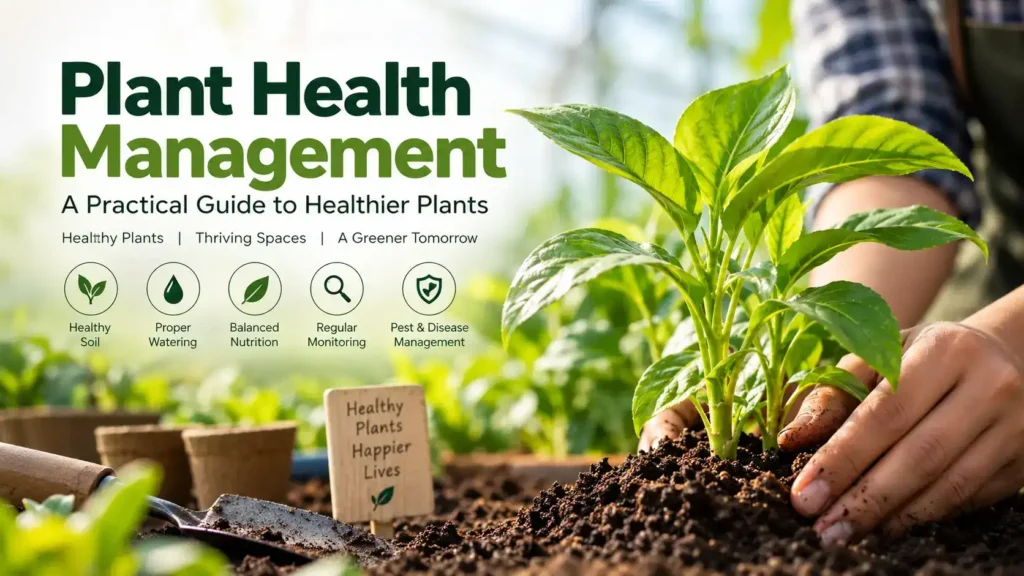
Plant health management is about helping plants grow well before problems become serious. Instead of waiting for yellow leaves, insect damage, or disease to appear, it focuses on creating the right growing conditions, checking plants regularly, and responding to problems early.
This approach works for home gardens, greenhouses, nurseries, and commercial farms. The details may change from one crop to another, but the principle remains the same: healthy plants are easier to maintain than plants that are already under stress.
In this guide, we’ll look at what plant health management means, why it matters, and how to build a practical plant care routine.
What Is Plant Health Management?
Plant health management is a proactive approach to keeping plants healthy by combining good growing practices, regular monitoring, and appropriate pest and disease management.
It is not simply about treating a plant when something goes wrong. It is about understanding what the plant needs and reducing the conditions that make problems more likely.
For example, a plant may struggle because of poor drainage, compacted soil, insufficient light, or excessive watering. An insect infestation may be only one part of the problem. If the underlying stress is ignored, treating the insect may not solve the plant’s decline.
A good plant health management program therefore considers the whole growing environment, including:
-
Soil condition and root health
-
Water and drainage
-
Light, temperature, and humidity
-
Plant spacing and airflow
-
Pests, diseases, and beneficial organisms
-
Regular inspection and record-keeping
This whole-system approach is consistent with plant health care and integrated pest management guidance from agricultural extension services.
Why Is Plant Health Management Important?
Healthy plants are generally better able to tolerate environmental stress and recover from minor damage. Good management also helps growers identify problems before they spread or become expensive to correct.
The benefits include:
1. Fewer preventable problems
Choosing suitable plants, preparing the soil properly, and maintaining appropriate growing conditions can reduce many common sources of stress.
2. Better growth and plant quality
Plants need the right balance of water, nutrients, light, and root space. When those conditions are suitable, they can use resources more effectively.
3. More efficient use of resources
Careful irrigation, targeted fertilization, and timely interventions can reduce unnecessary use of water and other inputs.
4. Earlier detection of pests and diseases
Regular checks make it easier to notice changes before a small issue becomes a major problem.
5. More sustainable plant care
Plant health management encourages prevention, biological controls, and other lower-impact methods before relying on chemical treatments.
The Main Pillars of Plant Health Management
A successful plant health program is built around several connected practices. No single treatment can replace all of them.
1. Start With the Right Plant in the Right Place
One of the simplest ways to improve plant health is to choose a plant that suits the growing conditions.
Before planting, consider:
-
Climate: Is the plant suited to the local temperature range?
-
Light: Does it need full sun, partial shade, or low light?
-
Soil: Can the roots grow in the available soil?
-
Water: Does the plant prefer consistently moist soil or better drainage?
-
Space: Will it have enough room to grow without overcrowding?
A plant that is poorly suited to its environment may remain stressed even when it receives regular care.
Practical tip: Check the plant’s growing requirements before buying it. Matching the plant to the site is often easier than trying to correct unsuitable conditions later.
2. Build Healthy Soil and Strong Roots
Healthy roots are essential for water and nutrient uptake. Soil that is compacted, poorly drained, or lacking organic matter can make it harder for roots to function properly.
Good soil management may include:
-
Testing soil when nutrient or pH problems are suspected
-
Improving soil structure with suitable organic matter
-
Avoiding unnecessary compaction
-
Providing adequate drainage
-
Using mulch where appropriate
-
Applying fertilizer according to the plant’s needs
However, more fertilizer is not always better. Excess nutrients can create problems, and different plants have different requirements.
The goal is balanced nutrition—not maximum nutrition. Soil structure, drainage, and nutrient availability should be considered together.
3. Water Plants Correctly
Both underwatering and overwatering can damage plant health.
Too little water can cause wilting, poor growth, and stress. Too much water can reduce oxygen around the roots and create conditions that encourage certain diseases.
A better watering routine considers:
-
Plant type and growth stage
-
Soil moisture
-
Weather and temperature
-
Container size or soil volume
-
Drainage
-
The plant’s tolerance for wet or dry conditions
Rather than watering every plant on the same schedule, check whether it actually needs water.
A useful habit: Inspect the soil and the plant before watering. If the soil is already wet, adding more water may do more harm than good.
4. Manage Light, Temperature, and Airflow
The environment around a plant can affect how well it grows and how vulnerable it becomes to stress.
In greenhouses and other controlled environments, growers may manage:
-
Light levels
-
Temperature
-
Humidity
-
Air movement
-
Plant spacing
-
Irrigation
For outdoor plants, these factors may be influenced by planting location, shade, wind exposure, and seasonal weather.
Good airflow and appropriate spacing can help reduce overly damp conditions around foliage. However, the ideal environment depends on the plant species and its growing stage.
Remember: There is no single environmental setting that works for every plant. The right conditions are the ones that match the crop.
How to Monitor Plant Health?
Regular monitoring is one of the most important parts of plant health management.
You do not need expensive equipment to begin. A simple inspection routine can help you notice changes early.
What to check
Look for:
-
Yellowing, wilting, or distorted leaves
-
Spots, lesions, or unusual discoloration
-
Insects or signs of feeding
-
Damaged stems or branches
-
Root problems
-
Changes in growth rate
-
Unusual moisture or drainage conditions
Pay attention to where the symptoms appear and whether they are spreading.
For example, yellow leaves may be related to several different causes, including watering issues, nutrient problems, or disease. The symptom alone does not identify the cause.
A simple monitoring routine
-
Walk through the growing area regularly.
-
Inspect a representative selection of plants.
-
Record unusual symptoms and environmental conditions.
-
Compare changes over time.
-
Investigate the likely cause before choosing a treatment.
Regular monitoring is recommended as a foundation of plant health care, and extension guidance emphasizes observing plant stress and developing pest problems before they become severe.
Integrated Pest Management: A Smarter Way to Handle Pests
Integrated pest management (IPM) is an approach that combines different methods to prevent and manage pests while minimizing unnecessary pesticide use.
It does not mean ignoring pests. It means making decisions based on the pest, the level of damage, and the available management options.
A typical IPM approach includes:
Prevention
Choose suitable plant varieties, maintain healthy growing conditions, and avoid practices that encourage pest problems.
Monitoring
Look for pests, disease symptoms, and changes in plant health.
Identification
Identify the pest or disease before deciding how to respond. Different problems require different treatments.
Non-chemical controls
Depending on the situation, these may include:
-
Removing affected plant parts
-
Hand-picking insects
-
Using physical barriers
-
Improving sanitation
-
Encouraging beneficial organisms
-
Adjusting watering or growing conditions
Targeted treatment
If treatment is necessary, choose an appropriate product and use it according to the label.
The important point is that IPM is not just spraying less—it is making better decisions about when and how to intervene.
Biological and Cultural Practices
Plant health management often works best when several simple practices support one another.
Cultural practices
These are everyday growing decisions that help prevent problems, such as:
-
Crop rotation where appropriate
-
Proper plant spacing
-
Cleaning tools and equipment
-
Removing affected plant material
-
Managing weeds
-
Using suitable irrigation practices
Biological controls
Biological control uses beneficial organisms to help manage pests. These may include natural predators, parasitoids, or other organisms that suppress harmful pests.
For example, encouraging beneficial insects can be part of a broader pest management strategy.
These methods are not universal solutions, but they can be useful components of an integrated approach.
Common Plant Health Problems and What They May Indicate?
|
Symptom |
Possible causes to investigate |
|---|---|
|
Yellow leaves |
Watering problems, nutrient issues, root stress, or disease |
|
Wilting |
Underwatering, root damage, heat stress, or disease |
|
Leaf spots |
Fungal, bacterial, or other causes |
|
Stunted growth |
Poor root conditions, nutrient imbalance, pests, or unsuitable environment |
|
Sudden leaf damage |
Insects, physical damage, or environmental stress |
|
Excess moisture, poor drainage, or root disease |
Important: These symptoms are clues, not diagnoses. The same symptom can have several causes, so the best treatment depends on identifying the actual problem.
The Role of Technology in Plant Health Management
Technology can make plant health monitoring more precise, especially in greenhouses and larger growing operations.
Depending on the scale of the operation, growers may use:
-
Soil moisture sensors
-
Temperature and humidity sensors
-
Irrigation monitoring
-
Crop records
-
Remote sensing
-
Image-based plant monitoring
-
Data analysis tools
These tools can help identify changes in growing conditions and support better decisions. However, technology works best when combined with good plant knowledge and regular observation.
A sensor can tell you that something changed. Understanding the plant helps you decide what to do next.
A Practical Plant Health Management Checklist
Use this checklist as a starting point for your garden, greenhouse, or growing operation:
- Check soil structure and drainage.
- Water according to plant needs.
- Avoid unnecessary fertilizer applications.
- Maintain suitable light and airflow.
- Inspect plants regularly.
- Identify pests and diseases before treating.
- Remove affected material when appropriate.
- Encourage beneficial organisms.
- Keep tools and growing areas clean.
- Record recurring problems.
- Review and improve your care routine over time.
The exact routine will vary by crop, but the goal is to make plant care consistent, observant, and preventive.
Frequently Asked Questions
What is plant health management?
Plant health management is a proactive approach to keeping plants healthy through suitable growing conditions, regular monitoring, and appropriate pest and disease management.
Why is plant health management important?
It helps reduce preventable stress, improve plant growth, identify problems early, and support more efficient use of resources.
What are the main pillars of plant health management?
The main pillars include healthy soil, balanced nutrition, correct watering, suitable environmental conditions, regular monitoring, and integrated pest management.
How often should I check my plants?
Check plants regularly during the growing season. The exact frequency depends on the crop, growing environment, and risk of pest or disease problems. Regular observation is more important than following a fixed schedule for every plant.
Is plant health management the same as pest control?
No. Pest control is one part of plant health management. Plant health management also includes prevention, soil care, watering, nutrition, environmental management, and monitoring.
Can healthy plants still get pests or diseases?
Yes. Healthy plants can still be affected by pests and diseases. The goal of plant health management is to reduce risk, improve resilience, and respond appropriately—not to guarantee that problems will never occur.
Should I use pesticides as soon as I see an insect?
Not always. First identify the insect and assess whether it is causing meaningful damage. IPM encourages using the most appropriate management method for the situation rather than automatically applying pesticides.
Final Thoughts
Plant health management is not about finding one perfect product or treatment. It is about building a growing environment where plants have the best chance to thrive.
Start with the basics: choose suitable plants, care for the soil, water thoughtfully, monitor regularly, and investigate problems before treating them. Over time, these habits can make plant care more effective, more sustainable, and easier to manage.
Healthy plants begin with healthy growing practices.

